Important: This site is for informational purposes only. Nothing here constitutes medical advice. Cold water immersion may not be appropriate for everyone — consult a licensed medical professional before beginning any cold therapy protocol. | Last Updated: June 2026
Performance-First Buying Guide · 2026

Best Ice Bath Chiller Units, Ranked by Actual Cooling Performance

BTU/hr and GPM are the only two specs that determine real-world cold plunge performance. We ignored the marketing and ran the engineering analysis.

Direct Answer

The best ice bath chiller unit is determined by three measurable specifications: BTU/hr cooling power, GPM pump circulation rate, and filtration method. Most consumer units fail to disclose these metrics. This guide ranks every chiller by verified performance data — not marketing claims — so you can match cooling capacity to your exact tub volume, target temperature, and installation environment.

⚠ Not medical advice. Affiliate site — we earn a commission at no cost to you.

<15°C Therapeutic Threshold
BTU/hr The Master Spec
3–4× Tub Turnovers/hr
20µm Filter Standard

Why "Cold" Isn't Cold Enough: The Therapeutic Window Defined

Direct Answer

The therapeutic window for cold water immersion begins below 15°C (59°F), with the optimal performance range between 10–15°C (50–59°F) according to peer-reviewed NIH research. Water above this threshold fails to trigger the cold shock protein response, norepinephrine release, and anti-inflammatory cascade that drive measurable recovery outcomes.

The physiological goal of cold water immersion (CWI) is to induce a precise set of systemic responses: reduced acute inflammation, attenuation of delayed-onset muscle soreness, cold shock protein upregulation, and hormonal adaptation including norepinephrine and cortisol modulation. These responses are temperature-dependent — they occur reliably below 15°C and become less predictable as water temperature rises above this threshold.

The National Institutes of Health establishes the sub-15°C benchmark as the threshold for validated CWI benefit in peer-reviewed literature (NIH PMC PMC6492480). Stanford Lifestyle Medicine identifies 10–15°C (50–60°F) as the optimal range where anti-inflammatory benefits are most consistently documented (Stanford Lifestyle Medicine). These two sources define the engineering target for any ice bath chiller system.

59°F
Maximum Threshold
Upper boundary of the validated therapeutic recovery window per NIH research
50–60°F
Optimal Range
Where anti-inflammatory and metabolic benefits are most consistently documented
±1°F
Precision Target
Digital thermostat accuracy standard — the performance baseline for a qualified chiller

Why Ice Alone Fails

Direct Answer

Ice alone cannot maintain a stable therapeutic temperature because it melts unpredictably — delivering an initial shock followed by rapid warming above the effective threshold. A mechanical chiller holds a precise, user-defined setpoint continuously, eliminating the temperature drift that makes ice-only protocols unreliable for consistent cold water immersion therapy.

Ice-based systems suffer from a fundamental engineering flaw: they deliver a single, non-adjustable thermal mass that dissipates rapidly. Temperature at session start may be well below therapeutic range, while temperature at session end — 15 to 20 minutes later — may have drifted above it. In warm ambient environments, the drift accelerates.

For daily users, the logistics compound the problem: bulk ice purchasing, storage, repeated handling, and unpredictable setpoint precision make ice an inconsistent protocol for evidence-based cold therapy. A mechanical chiller solves all three failure modes simultaneously — automated setpoint maintenance, digital thermostat precision (±1°F), and no logistical overhead per session.

BTU/hr: The Master Specification for Cooling Power

Direct Answer

BTU/hr (British Thermal Units per hour) is the single most important specification when comparing ice bath chillers because it measures actual cooling power — the rate at which the unit extracts heat from water. Without a verified BTU/hr rating, you cannot calculate whether a chiller will reach your target temperature within a usable timeframe.

One British Thermal Unit (BTU) is defined as the energy required to raise one pound of water by one degree Fahrenheit. BTU/hr is therefore the rate at which a chiller can remove heat from a body of water — the direct measure of how fast it can pull your tub from 75°F to 45°F under real-world conditions. It is unit-tested, physics-grounded, and not subject to marketing interpretation.

Horsepower (HP) ratings describe the electrical power consumption of a compressor motor — not the thermal transfer rate at the heat exchanger. Two chillers rated at "1 HP" can have meaningfully different BTU/hr outputs depending on refrigerant type, heat exchanger efficiency, and compressor design. HP tells you nothing about how fast your water will cool. BTU/hr tells you everything.

How to Calculate Your BTU/hr Requirement

Direct Answer

To calculate your required BTU/hr, multiply your tub volume in gallons by 8.34 (water weight per gallon), multiply by the desired temperature drop in degrees Fahrenheit, then divide by your target cooldown time in hours. Add a 25% safety buffer and an environment multiplier for ambient heat gain to get your recommended minimum chiller rating.

Three variables drive your BTU/hr requirement:

Example Calculation: 150-Gallon Outdoor Tub

  1. 150 gal × 8.34 lbs/gal = 1,251 lbs of water
  2. Starting temp 75°F → target 45°F = 30°F drop
  3. 1,251 lbs × 30°F = 37,530 total BTUs to remove
  4. ÷ 5 hour cooldown target = 7,506 BTU/hr baseline
  5. + 25% outdoor ambient buffer = 9,383 BTU/hr recommended
Minimum specification for this configuration: 9,400 BTU/hr. Always round up to the next available model tier.

BTU/hr Cooling Requirements Calculator

Direct Answer

This calculator applies the standard BTU/hr formula — water weight multiplied by temperature drop, divided by cooldown hours — then adds a 25% safety buffer and an environment-specific multiplier for ambient heat gain. Enter your tub volume, starting temperature, target temperature, cooldown window, and installation setting to receive a recommended minimum chiller BTU/hr rating.

Baseline BTU/hr
Recommended (Buffered)

⚠ Estimates only. Verify final specification with chiller manufacturer. Real-world performance varies by installation, ambient conditions, and usage pattern.

Water Circulation & Filtration: The Two Overlooked Performance Multipliers

Direct Answer

Water circulation measured in gallons per minute (GPM) is the second critical performance variable after BTU/hr. An undersized pump allows a thermal boundary layer to form against your skin, creating a warm microfilm that insulates your body from the cold water and significantly reduces the effective cooling rate of even a high-BTU chiller.

Water movement is not optional — it is the delivery mechanism for your chiller's BTU/hr output. Research into water-based cooling effectiveness, including studies from the University of Arkansas on thermal transfer in immersion environments (University of Arkansas, Water Cooling Research), confirms that moving water at a given temperature removes heat from the body significantly faster than still water at the same temperature.

The mechanism is the thermal boundary layer — a thin film of warmer water that accumulates against your skin during immersion, acting as an insulating barrier that reduces the effective temperature differential between your skin and the bulk water. Adequate GPM continuously replaces this warm boundary layer with cooler bulk water, allowing the chiller's rated BTU/hr output to transfer to your body rather than being absorbed by stagnant warm water adjacent to your skin.

Without sufficient circulation, a high-BTU/hr chiller effectively underperforms its specification: the bulk water cools to setpoint, but the person in the tub experiences a warmer effective temperature due to thermal stratification and boundary layer formation.

Calculating Your Minimum GPM Requirement

Direct Answer

Calculate your minimum pump GPM by dividing tub volume in gallons by 60, then multiplying by 3 for minimum flow or 4 for optimal flow. This delivers 3–4 complete tub turnovers per hour — the rate needed to continuously break the thermal boundary layer and maintain uniform water temperature throughout the immersion vessel.

GPM Quick Reference — 100 gal = 5–7 GPM  ·  150 gal = 7.5–10 GPM  ·  200 gal = 10–13 GPM  ·  300 gal = 15–20 GPM

Filtration & Sanitation: The Non-Negotiable Third Pillar

Direct Answer

Filtration and sanitation form the non-negotiable third pillar of any cold plunge system alongside BTU/hr cooling power and GPM circulation. The gold standard is a multi-barrier approach: a 20-micron cartridge pre-filter for particulate removal combined with dual ozone oxidation and UV sterilisation, delivering chemical-free water treatment with minimal ongoing maintenance requirements.

Cold water inhibits bacterial growth somewhat, but not reliably enough for a shared or daily-use immersion environment. Stagnant cold water — particularly with organic load from multiple users — can harbour bacterial populations that standard chlorination alone may fail to control without frequent testing and adjustment. A three-layer filtration approach addresses this comprehensively:

Sanitation Method Mechanism Chemical Residue Maintenance Rating
Ozone Only Oxidises on contact None (reverts to O₂) Low ✓ High
UV Only Damages microbial DNA None Low (bulb swap annually) ✓ High
Ozone + UV Dual-barrier None Very Low ✓✓ Gold Standard
Chlorine Oxidation + disinfection High Frequent dosing + testing Effective but harsh

Best Ice Bath Chiller Units 2026

Direct Answer

These four ice bath chiller units were selected from the full Amazon marketplace based on verified BTU/hr disclosure, pump GPM adequacy, filtration and sanitation method, build transparency, and warranty terms. Each unit is ranked by measurable cooling performance rather than marketing claims, brand recognition, or influencer endorsements — specifications you can independently verify before purchase.

⚠ Not medical advice. We may earn commission on Amazon purchases via links on this page.
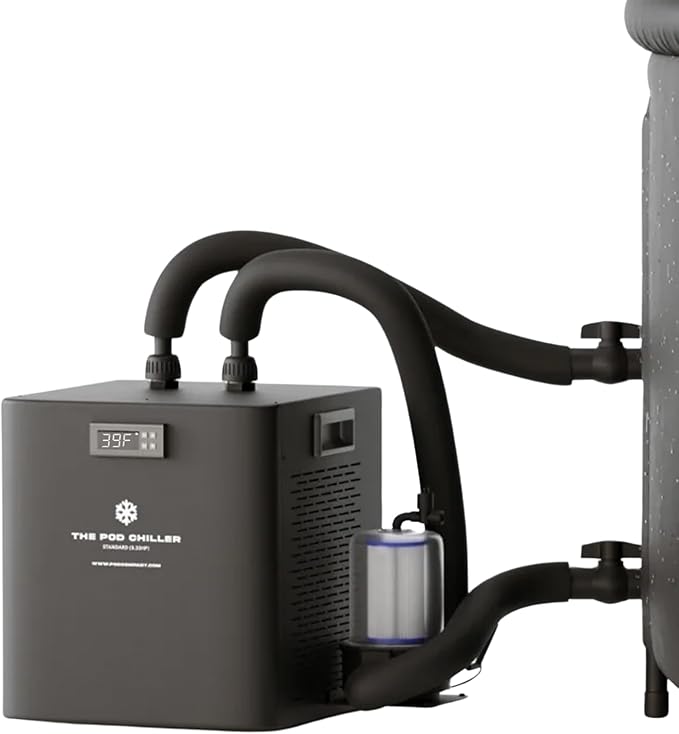
Pod Company Pro Water Chiller 0.5HP Editor's Pick
#1 Best Seller · All-In-One Performance
Pod Company Pro Water Chiller
"Amazon's #1 Best Seller in cold plunge chillers. Commercial-grade build purpose-designed for cold water immersion — not repurposed aquarium equipment — with precision digital temperature control."
  • Cooling Power0.5 HP · Verify BTU/hr
  • CirculationIntegrated pump
  • FiltrationCommercial-grade
  • Min. Temp~39°F
  • Best ForPerformance Athletes
View on Amazon →

⚠ Not medical advice. Affiliate link — we earn a commission at no cost to you.
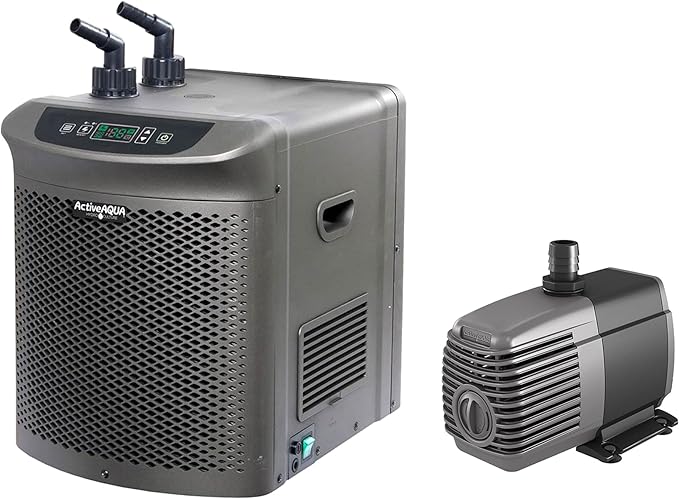
ActiveAqua 0.25HP Water Chiller Best Value
Best DIY Component · Budget Flex
ActiveAqua Water Chiller
"The go-to standalone chiller for DIY cold plunge builds. Transparent specs, 396–925 GPH flow range, and broad pump compatibility make it the most flexible entry-level platform."
  • Cooling Power0.25 HP
  • Circulation396–925 GPH · External pump
  • FiltrationSourced separately
  • Min. Temp~40°F
  • Best ForDIY Builds · Small Tubs
View on Amazon →

⚠ Not medical advice. Affiliate link — we earn a commission at no cost to you.
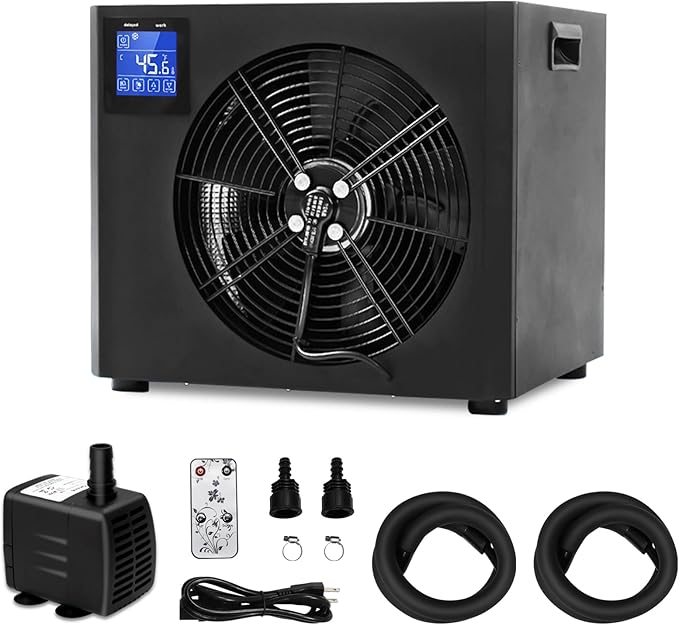
EONIX 1.0HP Ice Bath Water Chiller Premium Pick
Best Cold-Plunge Specific · 1.0HP
EONIX 1.0HP Ice Bath Chiller
"Purpose-built for cold plunge — not a repurposed hydroponic unit. Full 1.0HP compressor, cold-plunge-specific engineering, and the top non-sponsored result for daily wellness users."
  • Cooling Power1.0 HP · Verify BTU/hr
  • CirculationIntegrated pump
  • FiltrationVerify spec sheet
  • Min. Temp~37°F
  • Best ForDaily Wellness Users
View on Amazon →

⚠ Not medical advice. Affiliate link — we earn a commission at no cost to you.
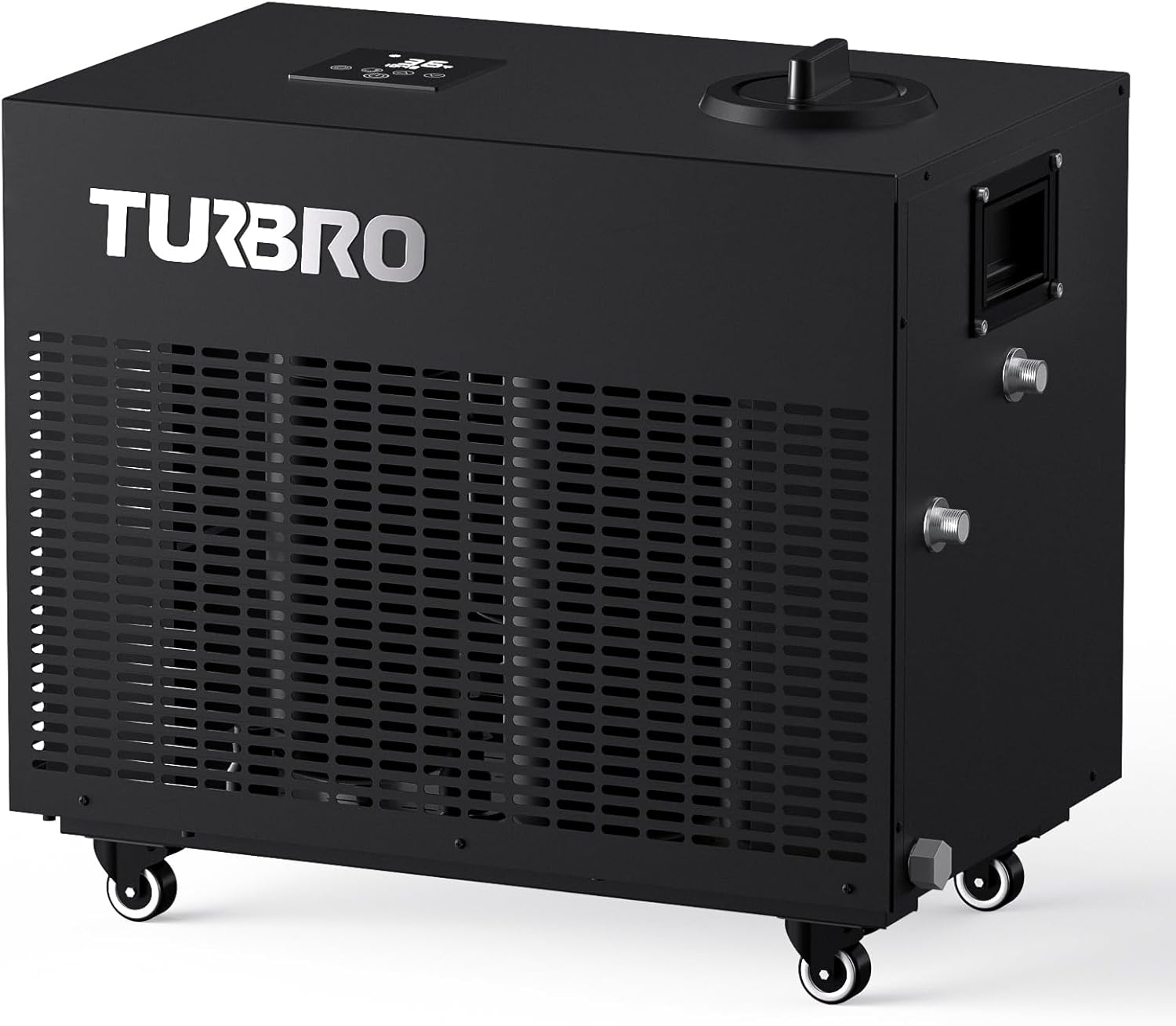
TURBRO 1HP 9300 BTU Smart Ice Bath Chiller BTU Disclosed
Best BTU-Transparent Pick · High Capacity
TURBRO 1HP 9,300 BTU Smart Chiller
"One of the only listings to disclose BTU/hr (9,300) in the title — the spec that matters most. Dual filters, ozone generator, schedule timer, and portable design with wheels and handles."
  • Cooling Power1 HP · 9,300 BTU/hr ✓
  • CirculationIntegrated pump
  • FiltrationDual filters + Ozone
  • FeaturesSchedule timer · Portable
  • Best ForHigh-volume users · Gyms
View on Amazon →

⚠ Not medical advice. Affiliate link — we earn a commission at no cost to you.

Which Chiller Fits Your Specific Use Case?

Direct Answer

The right chiller depends on three user-specific variables: your tub volume in gallons, your target temperature range, and your installation environment. A 100-gallon indoor tub targeting 50°F has fundamentally different BTU/hr and GPM requirements than a 200-gallon outdoor tub in a hot climate targeting 39°F — no single unit is universally optimal.

🏋️
Priority: Speed & Precision
The Performance Athlete

Highest BTU/hr relative to tub size, high-GPM pump to overcome post-exercise body heat load quickly. Rapid cool-down is the priority over features.

🧬
Priority: Reliability & Low Maintenance
The Wellness Biohacker

All-in-one with automated ozone + UV, Wi-Fi scheduling, quiet compressor. Zero-maintenance water hygiene is the differentiating feature.

🏢
Priority: Durability & Capacity
The Commercial Operator

Maximum BTU/hr, stainless steel construction, oversized filtration, rapid temperature recovery between sessions. Serviceability and warranty are non-negotiable.

Marketing Signal vs. Performance Signal

Direct Answer

Marketing signals include phrases such as "powerful cooling," "rapid chill," and "commercial-grade" without supporting data. Performance signals are verifiable specifications: disclosed BTU/hr rating, published pump GPM, named filtration micron rating, and compressor type. Always prioritise products that publish testable numbers over those that rely on subjective language and unquantified claims.

Specification Priority Why
BTU/hr Rating ✓ ★★★ Critical Only direct measure of cooling output
Pump GPM ✓ ★★★ Critical Delivers BTUs; breaks thermal boundary layer
Thermostat Precision ✓ ★★ Important Determines ability to hold therapeutic window
Filtration (20µm + Ozone + UV) ✓ ★★ Important Health, hygiene, and long-term water quality
Warranty & Support ✓ ★★ Important Critical given absence of NSF certification
HP Rating ✗ ★ Low Indirect proxy — demand BTU/hr instead
Wi-Fi / App Features ✗ ★ Low Convenience only; zero thermal performance impact
Aesthetic Design ✗ ★ Low No effect on cooling, GPM, or sanitation quality

Ice Bath Chiller FAQ

Direct Answer

These questions address the most common decision points when selecting an ice bath chiller unit — covering BTU/hr calculation, therapeutic temperature ranges, pump GPM requirements, sanitation methods, DIY versus all-in-one trade-offs, and the current absence of NSF certification standards. Each answer references the technical methodology explained in the guide sections above.

Calculate: (tub gallons × 8.34) × temperature drop (°F) ÷ target cooldown hours = baseline BTU/hr. Add 20–25% buffer for ambient heat gain. A 150-gallon tub cooling from 75°F to 45°F in 5 hours needs approximately 7,500 BTU/hr baseline — or 9,400+ with the recommended buffer. Always oversize rather than undersize. Use the calculator above for your specific configuration.
The validated therapeutic window per peer-reviewed research is below 15°C (59°F), with optimal benefits at 10–15°C (50–60°F). Temperatures above this range may not trigger the anti-inflammatory response, cold shock protein activation, or metabolic effects associated with effective CWI therapy. A digital thermostat-controlled chiller is the only reliable method to achieve and maintain this range consistently across sessions.
GPM is as critical as BTU/hr. A powerful chiller with an undersized pump fails to break up the thermal boundary layer — a warm insulating film that forms against your skin during immersion, reducing effectiveness regardless of bulk water temperature. Target 3–4 full tub turnovers per hour: divide tub gallons by 60, multiply by 3–4 for minimum GPM. A 150-gallon tub requires a minimum of 7.5–10 GPM.
Both are effective and serve complementary roles. Ozone is a contact oxidiser that destroys bacteria and organic matter, reverting to harmless oxygen after use. UV sterilisation damages microbial DNA to prevent reproduction. Dual ozone + UV combined with a 20-micron mechanical pre-filter is the gold standard: multi-barrier protection, zero chemical residue, and the lowest maintenance overhead of any sanitation method.
Both routes use the same three core components: a chiller, a pump, and filtration. All-in-one systems integrate these with matched component ratios, plug-and-play setup, and a unified warranty covering the entire system. DIY systems offer potential cost savings and customisation flexibility, but require you to correctly match BTU/hr, GPM, and filtration specifications yourself. Apply identical evaluation criteria to both: BTU/hr, GPM, filtration micron rating, and sanitation method.
As of early 2024, no established NSF (National Sanitation Foundation) testing standards exist specifically for cold plunge chiller units. This regulatory gap makes manufacturer transparency, verifiable BTU/hr and GPM disclosure, and comprehensive warranty coverage especially critical evaluation criteria. Prioritise brands that publish testable, verifiable specifications over those that rely on HP ratings, endorsements, or aesthetic positioning alone.